By P.C. Zick – @pczick.bsky.social
Last week, I wrote about the inspiration of Marjorie Kinnan Rawlings on my life and career. Here is the essay “Human Heirs” that I wrote for the Marjorie Kinnan Rawlings Essay Contest in 2001 as I left my decades-long teaching career to venture into freelance writing. The essay won first place and set me on the journey of a writer for the next twenty-four years.
Human Heirs
My new world frightened me. I didn’t see the beauty of the live oak trees draped in moss or understand the lure of frogs singing on a summer night. The wildlife of northern Florida held threats to my safety and left me wondering why we had moved here from Michigan.
I saw danger lurking in the surrounding wilderness. One morning I looked in the mirror and saw a tick, fat with my blood, attached to the center of my forehead. The first time I saw a broadhead skink, I threatened to leave my new home and head back to a land of lizard-less landscapes.
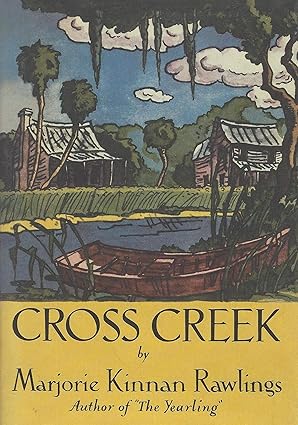
After hearing I wanted to leave, a neighbor suggested I read Cross Creek. I had never heard of Marjorie Kinnan Rawlings even though The Yearling sounded familiar.
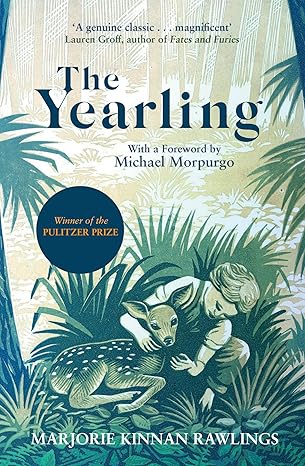
Not only was Ms. Rawlings a writer, something I aspired to be, but she had conquered her fears of a Florida wilderness and wrote with affection about an area much more rural than anything I had experienced. For the first time, I began to understand the rhythms of life in this land that was beginning to own me.
When I heard the call of my first “chuck will’s widow” heralding spring, I welcomed the songbird with pride because, thanks to Ms. Rawlings, I knew it was a cousin of the whip-poor-will. Now I listen for it every year.
I read about her trip to the Everglades with Ross Allen to hunt rattlesnakes. This woman became my hero as I fought to overcome my fear of snakes. When I welcomed a black racer into my garden last year, my appreciation for the nature of north Florida became complete. I had not made a mistake by moving here.
I devoured her novels. Jody Baxter’s struggles chronicled a rite of passage much purer than anything I’d read before. And South Moon Under allowed a glimpse into the people I had begun to call neighbors.
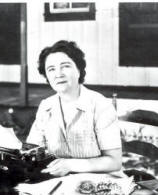
The picture of Ms. Rawlings, on her porch with the typewriter in front of her, remained a constant in my mind as I struggled to find the writer in me. That picture became reality when I began to put aside the distractions of my life as a teacher and started my own journey as a writer.
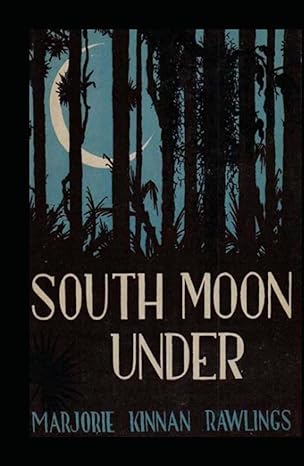
Recently one of my students struggled to find an American author to read. I suggested South Moon Under. When he finished, he said, “I never thought I’d like this book, but I want to thank you for suggesting it. It is the most interesting book I’ve ever read.”
No longer afraid of the world around me, I returned what had been given to me when my neighbor suggested I read Cross Creek. Ms. Rawlings lives on in those “human heirs” who sojourn here for only a short time while the creatures and landscapes around us continue their cycle of life and death and rebirth, completing the essential rhythms of a world filled with wonder.
****
I am in the process of reading Ann McCutchan’s biography of Rawlings, and I am struck by the honest assessment of herself and her shortcomings in her letters. I’m not only learning about her, but her truths are teaching me about myself as well. The Life She Wished to Live is an astounding work of nonfiction that delves into the creative mind. Rawlings’s editor, Maxwell Perkins, also was editor to Ernest Hemingway, Scott Fitzgerald, and Thomas Wolfe–just a few of the brightest and best authors of this era. I highly recommend the book for its historical perspective, including a perspective on women journalists of the early twentieth century.

I’ll leave you with the quote from Cross Creek that inspired the title of my essay and provided me with a road map for its theme.
“Who owns Cross Creek? The red-birds, I think more than I, for they will have their nests even in the face of delinquent mortgages. And after I am dead, who am childless, the human ownership of grove and field and hammock is hypothetical. But a long line of red-birdsand whippoorwills and blue-jays and ground doves will descend from the present owners of nests in the orange trees, and their claim will be less subject to dispute than that of any human heirs.” Marjorie Kinnan Rawlings, Cross Creek, 1942
 P.C. ZICK