
By P.C. Zick – @pczick.bsky.social
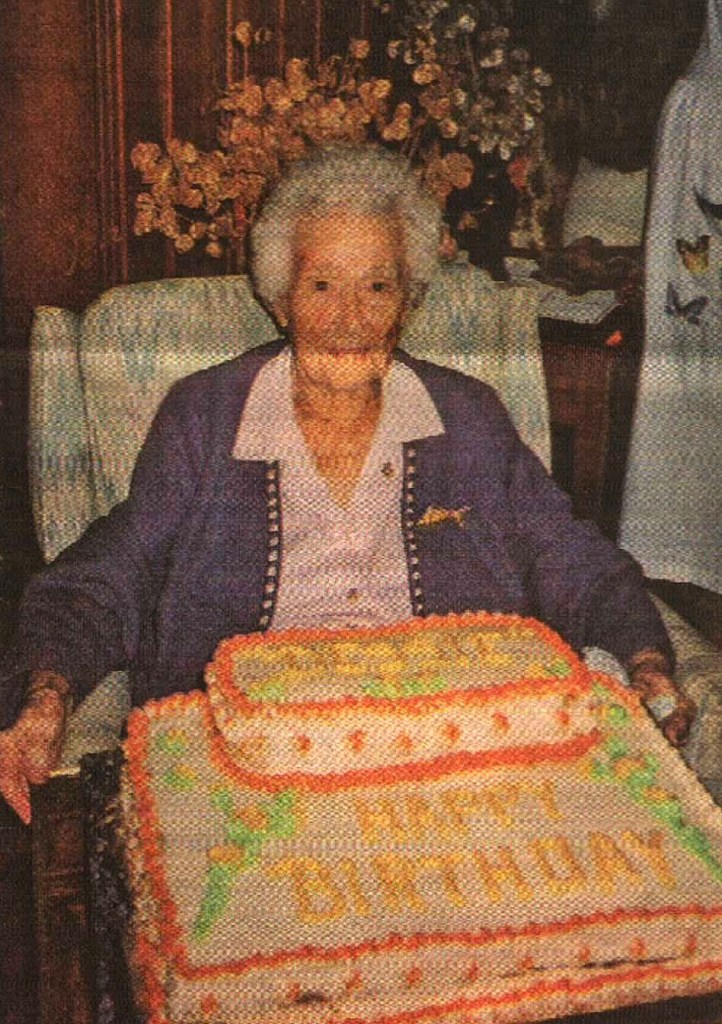
As a freelance writer, I’ve been fortunate enough to write about some interesting events and people. In a few instances, I’ve even had the privilege of interviewing a handful of famous or infamous folks. Dessie Smith Prescott could be categorized as both famous and infamous, and the interview with her in 2001 remains a favorite. When I interviewed her in 2001 on her 95th birthday, she was the oldest living member of the Florida Women’s Hall of Fame. She died the following year. Her inspirational life story shows that the human spirit, despite the worst odds, can survive anything through hard work and dedication.
Photo by P.C. Zick at Dessie Smith Prescott’s 95th birthday celebration in 2001.
Born in 1906 in the wilderness of north Florida, Prescott survived several tragedies as a child. When she was three, her father was murdered.
“Daddy was a big man, and he was coming home,” she told me during her birthday celebration at her home on the Withlacoochee River, near Crystal River, Florida. “They didn’t have streetlights, and somebody waylaid him and took him across the head with a big healthy post.”
In 1918, her two brothers were in New York awaiting departure to fight in the war. Her mother wanted to see her sons before they left, so Prescott and her mother left Florida to visit them in New York, but while there, her mother died from the Spanish flu.
“Mama expressed a wish to be buried in Florida,” Prescott explained. “So, at twelve years old I said, ‘I’ll taker her back home.’ And I did.”
It took Prescott three days on the train to bring her mother’s body back to their home in Island Grove, near Gainesville, Florida. “So, she was buried where she wanted to be.” Prescott smiled broadly.
Upon her return to Florida, she moved in with her aunt and uncle near Sparr but only stayed a few years. She headed first to Baltimore to live with her brother but soon left for Atlantic City where she lied about her age to land a waitressing job on the boardwalk. When she was seventeen, she had saved enough money to return to Florida. She found a strip of land near Citra that she liked, so she found the owner and approached him with the deed and a hundred-dollar bill.
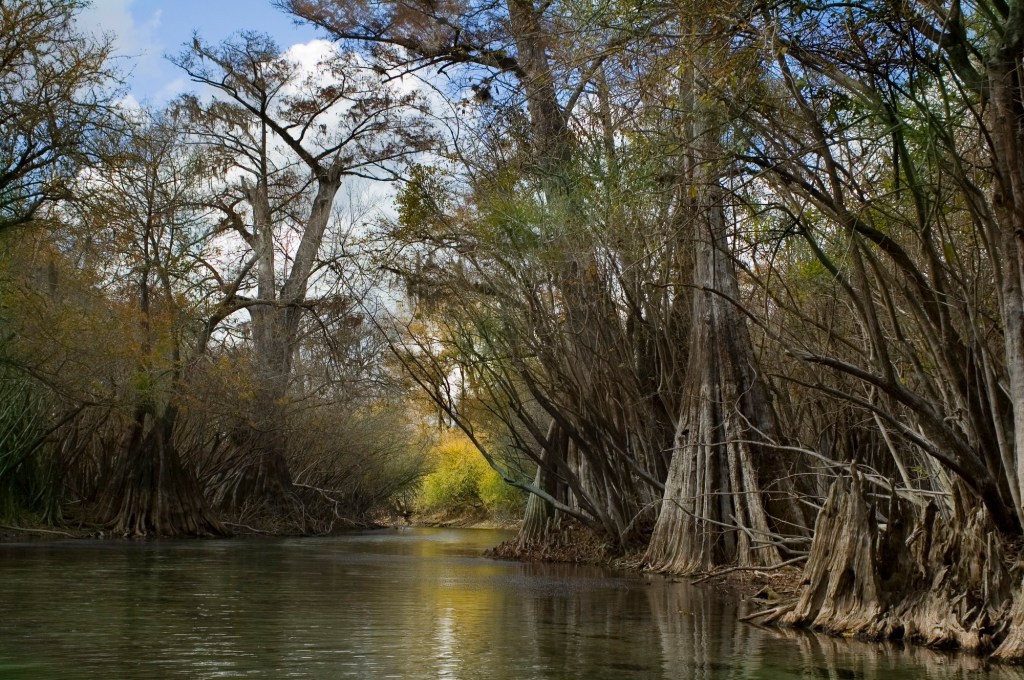
With determination, she set out to build a cypress log cabin herself on her newly acquired land. She found a mill owner who would cut the logs for free if she went into the cypress swamp and marked the ones she wanted. An old man with three oxen helped her pull the logs out. In three years, she finished the house with two great rooms, a kitchen, dining room, three bedrooms, a bathroom, and two fireplaces. Thus, by the age of twenty she owned sixty acres with a large log cabin. Prescott lived for adventure and did not let the standards of society shackle her to the traditional female role.
Photo by P.C. Zick – Cypress trees in north Florida
She told me she married her first husband while building the log cabin, but she can’t remember exactly when. “I guess I’d run out on him at some point,” she said in 2001. In fact, Prescott married six times, with the sixth marriage lasting twenty-six years, and the only marriage to make her a widow. She didn’t stay married if, “I decided the person didn’t fit in with my life. I decided the best thing to do was to give them their freedom. I paid for all my divorces. I enjoyed them all for a time.”
Prescott became friends with another famous woman in the Florida Women’s Hall of Fame—Marjorie Kinnan Rawlings, who had settled in Cross Creek not far from Prescott’s home.
Photo: Marjorie Kinnan Rawlings on the porch of her home in Cross Creek.

Prescott met Rawlings after a neighbor came to the rugged outdoorswoman and asked her to visit a new couple who had recently moved onto an orange grove near Cross Creek. Prescott’s friend predicted that without help the Rawlings might starve to death.
“The grove had been neglected for years,” Prescott said. “Groves take about twice as long to bring back as you’ve neglected them, and they hadn’t got a chicken or pig or anything on the whole place.”
So Prescott visited the house in Cross Creek where Rawlings wrote her Pulitzer-prize winning novel The Yearling. After she assessed the couples’ dire situation, she took Marjorie under her wing. Despite being ten years younger than Rawlings, Prescott took to calling her “young un” because “she didn’t know anything about anything that I did.”
When Rawlings’ marriage began falling apart, Prescott suggested the two take a trip on the St. Johns River from its beginnings in Volusia County up to the Ocklawaha River.
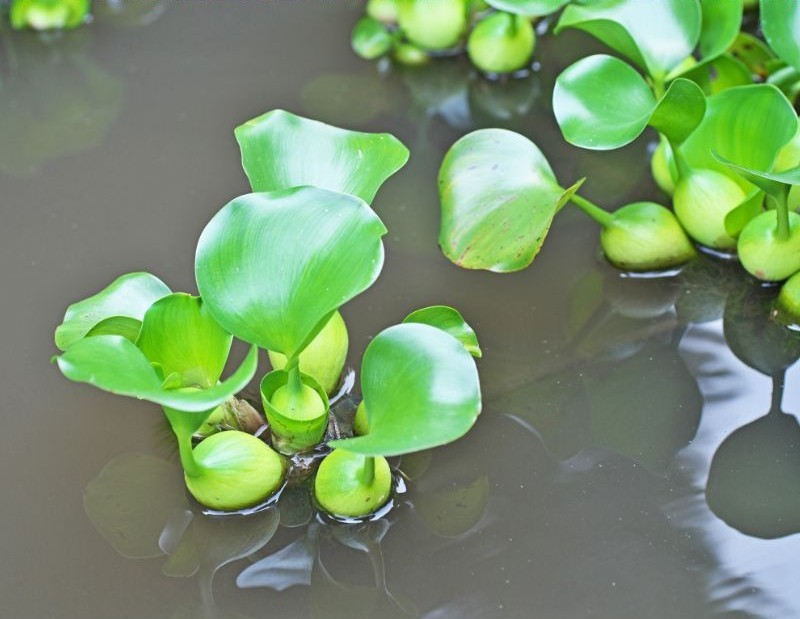
Rawlings chronicled the trip in the essay “Hyacinth Drift,” which was published in Cross Creek. She wrote, “Once I lost touch with the Creek …I talked morosely with my friend Dessie. I do not think she understood my torment, for she is simple and direct and completely adjusted to all living. She knew only that a friend was in trouble.”
Photo: Hyacinth
Prescott summed up the differences between the two women in an interview with Florida Magazine in 1995. “I always said Marge could describe a magnolia, and I could smell it. She was that good.”
During the trip, Prescott and Rawlings encountered men who were amazed at the audacity of two women traveling the river without accompaniment, but the two women paid little attention. They came upon the port in Sanford on a Sunday morning, and Prescott prepared for the place where large-vessel traffic on the St. Johns stopped.
Rawlings wrote, “Dess strapped around her waist the leather belt that held her Bowie knife at one hip and her revolver at the other and felt better prepared for Sanford than if we had been clean.”

The two women drew apart by 1936. According to Rawlings’s biography by Ann McCutchan, The Life She Wished to Live, Rawlings pulled away from Prescott. McCutchan said that fifty years later Prescott blamed it on “Marjorie’s drinking, depressive moods, and refusal to testify in Dessie’s divorce trial,” although Prescott couldn’t remember which divorce it might have been. In 1943, they must have smoothed the rough spots. Prescott had joined the Women’s Army Corp during World War II and showed up at the house in Cross Creek with five other WACs. McCutchan notes that Rawlings wrote, they were “a tough bunch of pistol-packing Mamas.”
Prescott worked almost her entire life. She learned to fish and hunt when she was five to put food on the table. She waitressed, she herded turkeys, worked in real estate in Tampa and Orlando, sold cars, and did a myriad of other odd jobs that suited her. Her place in the history of Florida women is sealed in her accomplishments. She was the first Florida woman to become a licensed fishing and hunting guide as she led fishing and hunting parties into the wilderness in Florida, Alaska, and Africa. She became a pilot during World War II, which made her Florida’s first licensed female pilot.
Photo: Dessie Prescott Smith
Named for the Russian town of Odessa where her uncle had fallen in love with a Russian girl, Dessie’s legacy remains as unique and beautiful as her name.
A recent biography of Dessie Smith Prescott with lots of photos and shared memories of those who knew her best, chronicles her life and provides some insight to her simple yet expansive life.
Dessie Smith Prescott by Kevin McCarthy

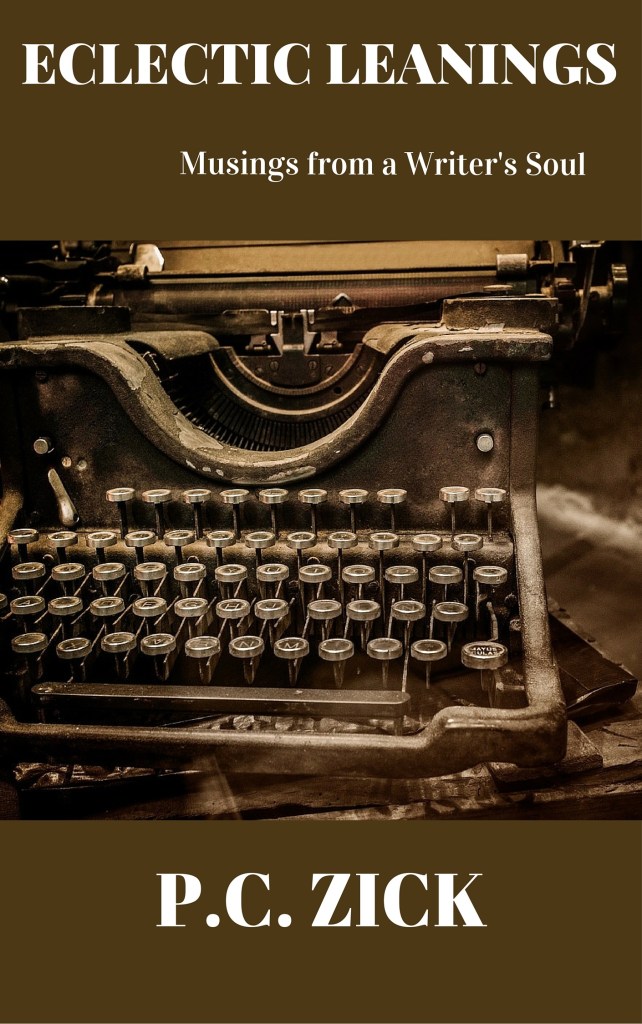
To read more interviews and essays by P.C. Zick, check out Eclectic Leanings – Musing from a Writer’s Soul on Amazon (Kindle and Paperback).
 P.C. ZICK